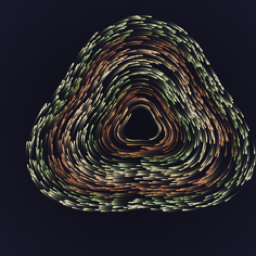
wake
A living drawing instrument
Thousands of line-heads move through fields of force and leave their trace. Every visit opens a new design from a collection of 100,000, and you can stir it, pull it, or tap for another. Some designs are real science: chaos, orbits and synchronisation, simulated from the equations that describe them.
Running live. Tap for a new design, drag to stir, hold to pull.
A simulation, not a picture
Every line-head has its own position, velocity and clock, and fades into a trail. The number of line-heads adapts to the device from measured frame time, so wake never freezes.
100,000 designs, fifteen behaviours
Each number picks a behaviour first, then its colours: Boids flocking, Kepler-like orbits, waves after Bridget Riley, grids after Agnes Martin, and more. The same number gives the same design on every device.
Beautiful because it's true
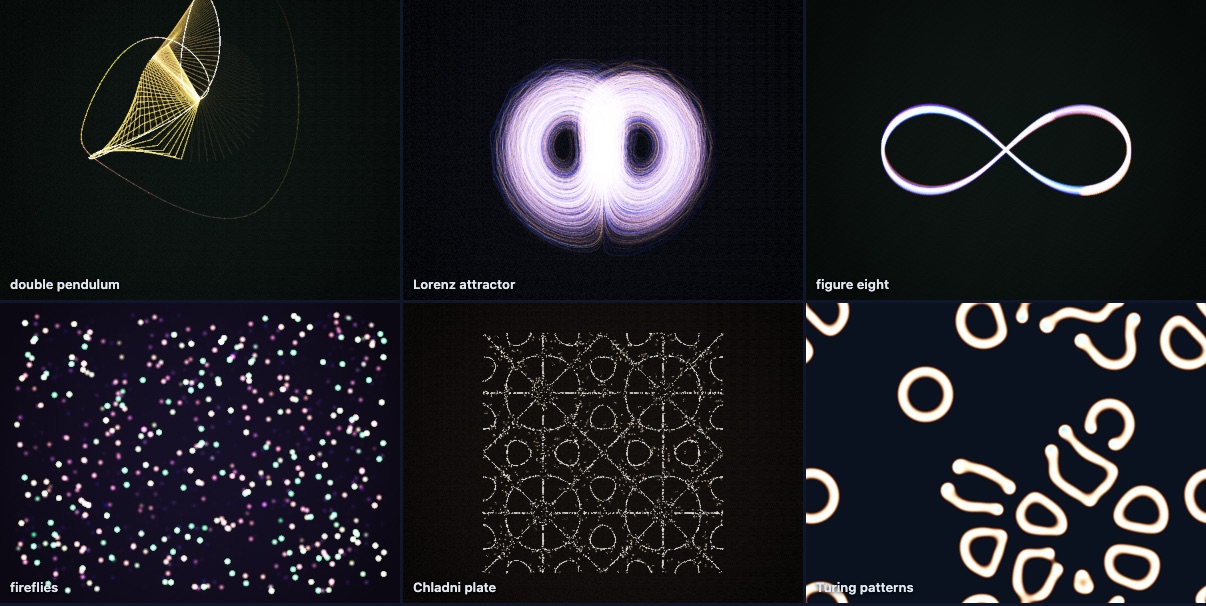
Six pieces run real equations, each with a card showing the equation, its source paper, and one control that reveals the idea: push the fireflies past their critical coupling and they flash as one.
The science family
Checked, not claimed
- Lorenz chaos rate measured at 0.90 against the published ≈ 0.906.
- Fireflies synchronise exactly as Kuramoto theory predicts, to within 0.001.
- Orbits and pendulums conserve energy to better than one part in 100,000.
- Turing patterns on the GPU match the CPU reference (correlation 1.0000).
- Alive: visible motion within a second of every visit, and it never freezes, even without a GPU.
- Original: a token-level copy check against its inspiration finds no shared code.
68 automated tests. An expert review of the science and tests with first-time visitors are next.
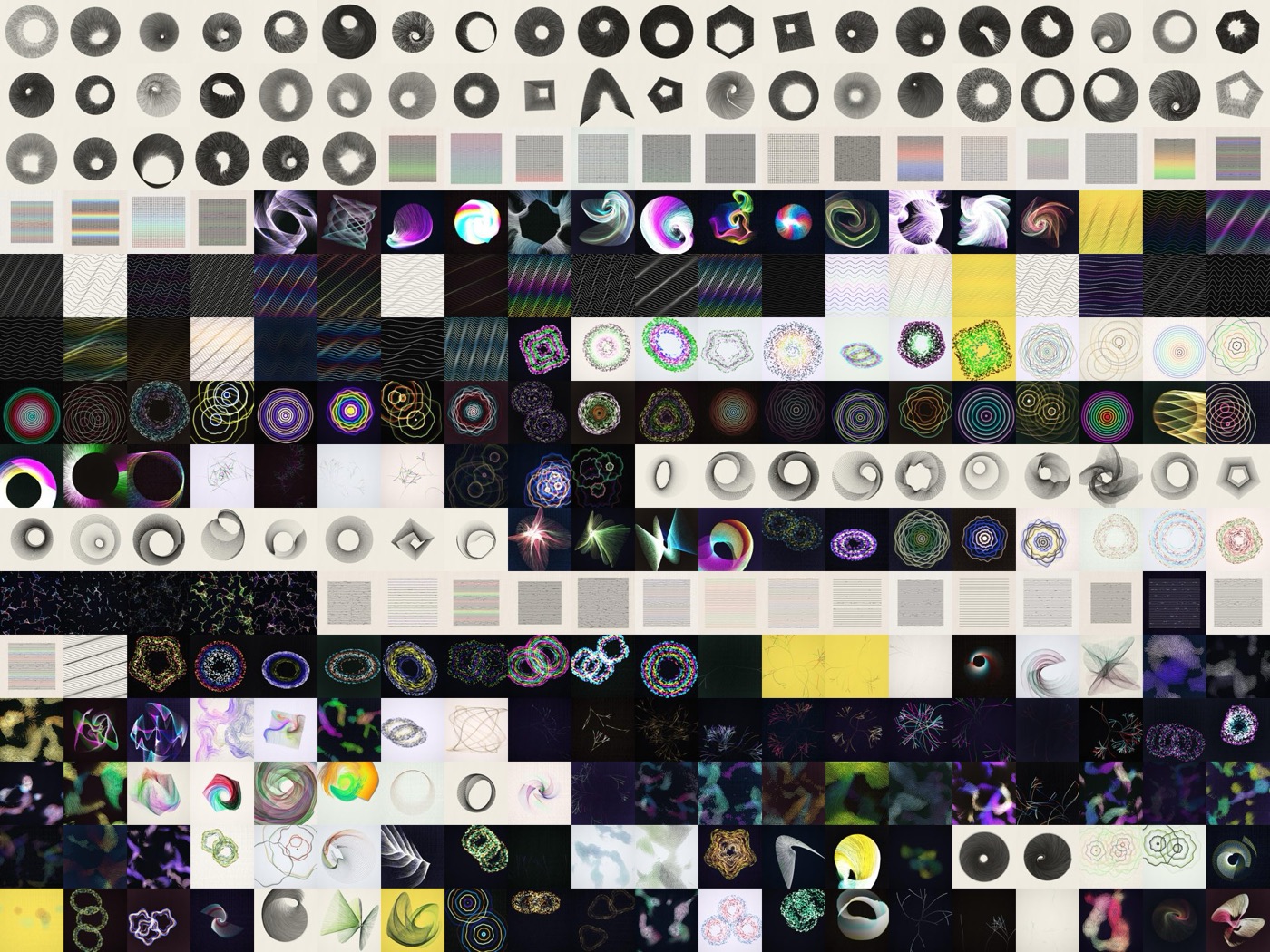
300 designs sampled from the collection, grouped by visual similarity.